How Businesses Can Repurpose One Photoshoot Into Weeks of Marketing Content
In today's digital-first business environment, companies are constantly expected to create fresh content.
LinkedIn needs regular updates. Instagram needs Reels and images. Websites need professional visuals. Sales teams need presentations. HR teams need employer-branding content. Marketing teams need campaign assets.
The challenge isn't always creating content.
The bigger challenge is creating enough useful content without constantly starting from scratch.
A well-planned professional photoshoot can solve part of that problem.
Instead of treating a photoshoot as a one-time requirement for a few website images, businesses can plan it as a content production day—creating a library of visual assets that can be used across multiple marketing and communication channels for weeks or even months.
One Photoshoot Can Create Much More Than Photographs
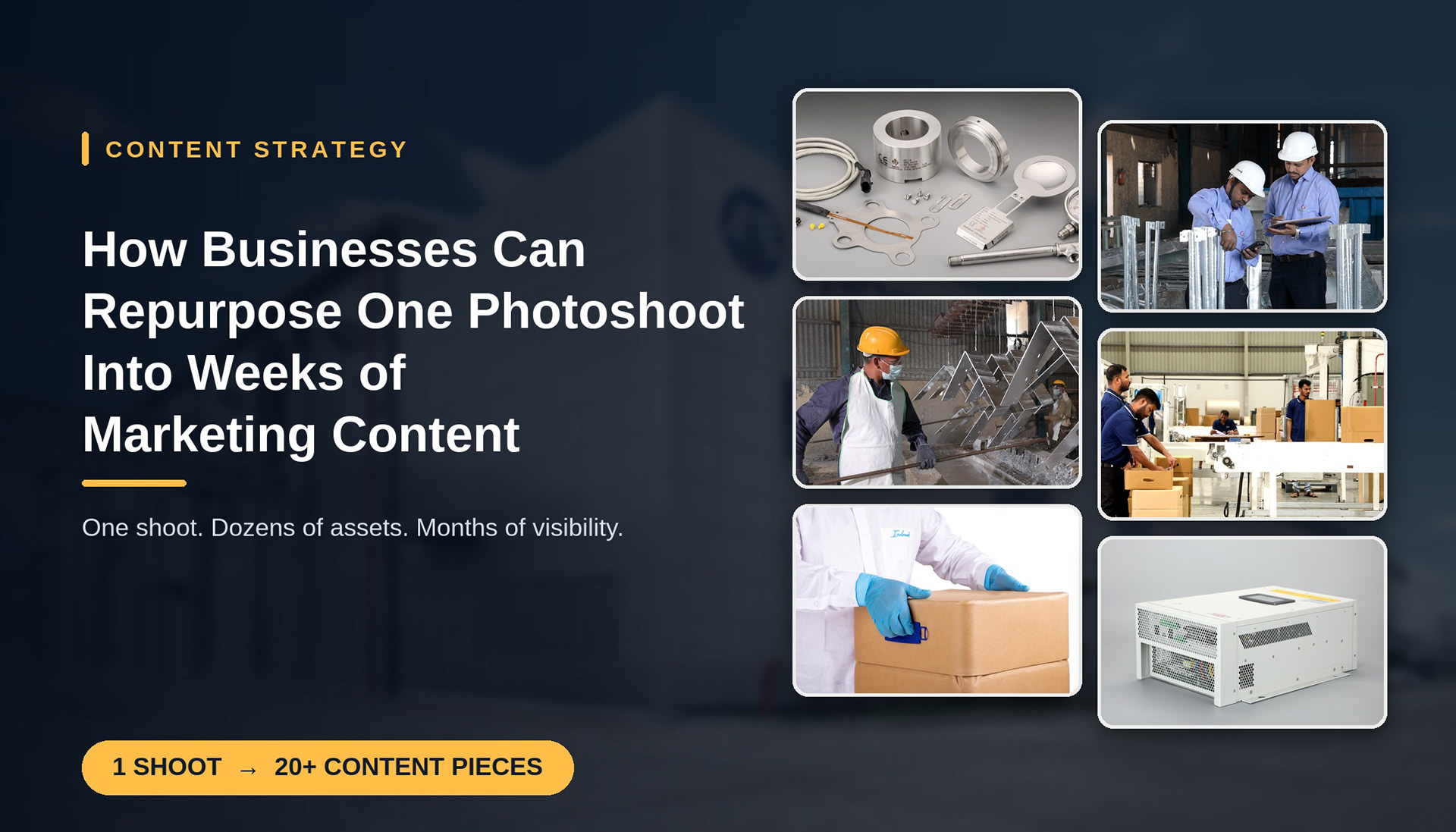
Consider a manufacturing company planning a one-day industrial and corporate photoshoot.
The initial requirement might be simple:
"We need photographs of our factory for our website."
But with the right planning, the same shoot can capture much more:
Factory and infrastructure
Machinery and equipment
Manufacturing processes
Products
Employees at work
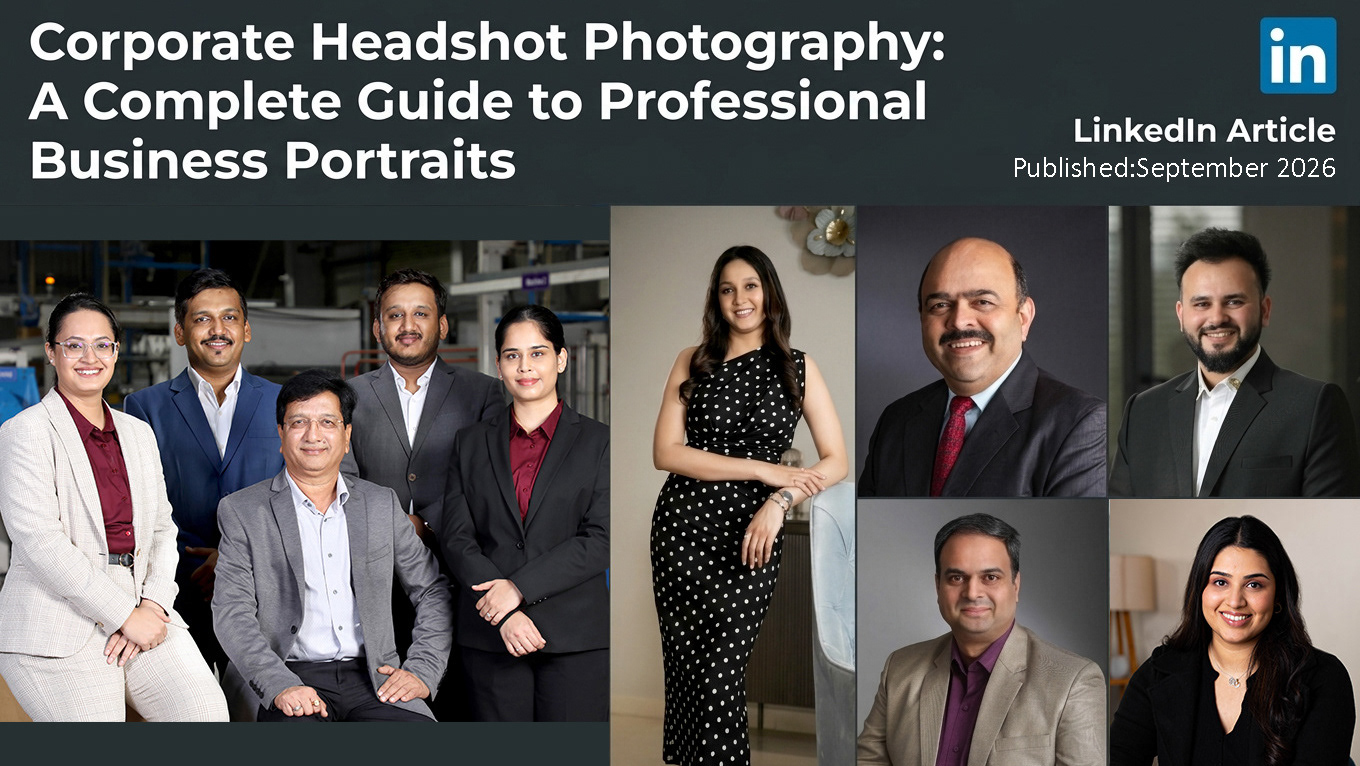
Management and leadership portraits
Team photographs
Safety and quality processes
Office environment
Behind-the-scenes moments
Short-form vertical video
Corporate video footage
Interview footage
Social media content
Website banner images
The result is not just a collection of photographs.
It becomes a visual content library for the business.
1. Start With the Content Requirements, Not the Camera
One of the biggest mistakes businesses make is planning a photoshoot only around the images they need today.
Instead, start by asking:
Where will this content be used over the next 3–6 months?
For example:
Website
Homepage banners
About Us section
Management profiles
Manufacturing/process pages
Product pages
Careers page
LinkedIn
Company updates
Project announcements
New machinery
Manufacturing milestones
Employee stories
Leadership posts
Behind-the-scenes content
Instagram
Reels
Carousels
Stories
Product posts
Factory walkthroughs
Team content
Sales & Business Development
Company presentations
Client proposals
Brochures
Capability presentations
Product catalogues
HR & Employer Branding
Employee photographs
Workplace culture
Team activities
Recruitment campaigns
Careers pages
Once these requirements are identified, the shoot can be planned around creating the right content for each channel.
2. Turn One Photoshoot Into Multiple Content Categories
A professional shoot can be divided into several content categories.
For a manufacturing or corporate company, these might include:
A. Brand & Infrastructure
Capture the overall scale and identity of the company.
Examples:
Exterior architecture
Reception
Office spaces
Factory floor
Production facilities
Important infrastructure
These images are useful for websites, presentations, company profiles and brochures.
B. People
People make corporate communication more relatable.
Capture:
Leadership portraits
Employees at work
Teams
Department interactions
Engineers and technicians
Management meetings
Workplace culture
These can support LinkedIn, recruitment and employer-branding communication.
C. Products
Create professional photographs of:
Finished products
Product details
Product-in-use
Product variations
Packaging
Manufacturing stages
These assets can be used by marketing and sales teams across multiple platforms.
D. Processes
For industrial businesses, the manufacturing process itself can become valuable content.
Show:
Raw material handling
Production
Quality control
Testing
Packaging
Dispatch
Machinery operation
These visuals help potential customers understand what happens behind the product.
3. Capture Vertical Video Along With Photography
A major opportunity businesses often miss is capturing short-form video during the same production day.
The photographer or videographer can capture vertical footage specifically for:
Instagram Reels
LinkedIn videos
YouTube Shorts
Stories
Product teasers
Behind-the-scenes content
For example, while photographing a production line, the team can also capture:
Machinery operating
Employees working
Product movement
Close-up details
Wide factory shots
Quality inspection
Packaging
Loading and dispatch
A single production environment can therefore produce both photography and video assets.
This makes the shoot much more valuable for a modern marketing team.
4. Create Different Content From the Same Image
One strong photograph doesn't necessarily need to be used only once.
For example, a photograph of a company's CNC machining process could become:
LinkedIn Post
Precision is built into every stage of our manufacturing process.
Website
Used on the manufacturing capabilities page.
Instagram
Used as part of a carousel showing the production process.
Sales Presentation
Used on a slide describing manufacturing capabilities.
Brochure
Used alongside company and process information.
The image remains the same, but its communication purpose changes.
This is the foundation of content repurposing.
5. Build a Monthly Content Library
Instead of posting everything immediately, organize the assets into categories.
For example:
Month 1
Company introduction
Factory overview
Leadership profile
Product highlight
Month 2
Manufacturing process
Employee story
Quality-control photograph
Product detail
Month 3
Behind-the-scenes Reel
Technology/machinery post
Team photograph
Manufacturing milestone
This approach allows the marketing team to maintain a consistent visual presence without arranging a new shoot every few weeks.
6. Combine Photography With Reels
Today's marketing content isn't limited to static photographs.
A single shoot can produce different formats:
Photography
→ Website images → LinkedIn posts → Instagram carousels → Brochures → Presentations → Advertisements
Video
→ Reels → LinkedIn videos → YouTube Shorts → Stories → Website video → Corporate presentations
This combination creates a more complete visual communication system for the brand.
7. Plan a Shot List Before the Shoot
The difference between an ordinary photoshoot and a productive content shoot often comes down to planning.
Before the shoot, prepare a detailed shot list.
For example:
Company
☐ Factory exterior ☐ Reception ☐ Office ☐ Production floor
People
☐ Leadership portraits ☐ Employee portraits ☐ Teams ☐ Employees working
Manufacturing
☐ Machinery ☐ Production process ☐ Quality control ☐ Testing
Products
☐ Hero product shots ☐ Product details ☐ Product-in-use
Video
☐ Vertical factory footage ☐ Machinery movement ☐ Employee interactions ☐ Process footage ☐ BTS footage
This ensures the production team isn't simply "taking photographs."
They are creating planned marketing assets.
8. Think in Content Assets, Not Just Images
A traditional approach might measure a photoshoot by the number of photographs delivered.
For example:
"We received 100 photographs."
A content-focused approach asks a different question:
"How many marketing assets can we create from this shoot?"
That could mean:
50 website photographs
10 LinkedIn posts
8 Instagram posts
5 Reels
3 employee-branding posts
1 company presentation
1 brochure
Multiple sales-presentation visuals
The value of the shoot therefore comes from how effectively the content is used, not simply how many files are delivered.
9. Give Your Marketing Team a Content Library
After the shoot, organize the files properly.
A useful structure could be:
1)Company & Infrastructure
2) Leadership & Corporate
3) Employees & Teams
4)Manufacturing & Processes
5) Products
6) Vertical Video
7) Reels
8) Website
9) Social Media
Add useful file names and metadata where appropriate.
This makes it easier for marketing, HR, sales and management teams to find the right visual whenever they need it.
10. The Real Benefit: Consistent Brand Communication
The biggest advantage of repurposing isn't simply saving money on photography.
It is consistency.
When a company uses professionally created images and videos across its website, LinkedIn, social media, presentations and marketing campaigns, its communication begins to feel more unified.
The brand looks more professional because the visual language is consistent.
And importantly, the marketing team spends less time searching for random images or arranging last-minute photography.
From One Shoot to a Complete Content System
A professional photoshoot shouldn't necessarily be viewed as:
"We need some photographs for our website."
Instead, think:
"We need a visual content library that supports our marketing for the next few months."
That small change in thinking can completely change how the shoot is planned.
With the right preparation, one production day can generate photography, video, social-media assets, website content, employer-branding visuals, sales material and corporate communication assets.
Planning Your Next Corporate or Industrial Photoshoot?
If your company is planning a website update, product launch, corporate campaign, manufacturing documentation or social-media content, consider planning the shoot around your complete content requirements, rather than a single deliverable.
At Ameru Photography, we create professional photography and video content for businesses, manufacturers, brands, architects, interior designers and corporate teams across Pune and Mumbai.
From industrial and corporate photography to product images, workplace visuals, video and short-form content, the objective is simple:
Create visual content that your business can actually use.
One Shoot. Multiple Platforms. Weeks of Content.
View the Ameru Photography Portfolio → https://ameruphotography.myportfolio.com/
Planning a shoot? Get in touch to discuss your content requirements.